
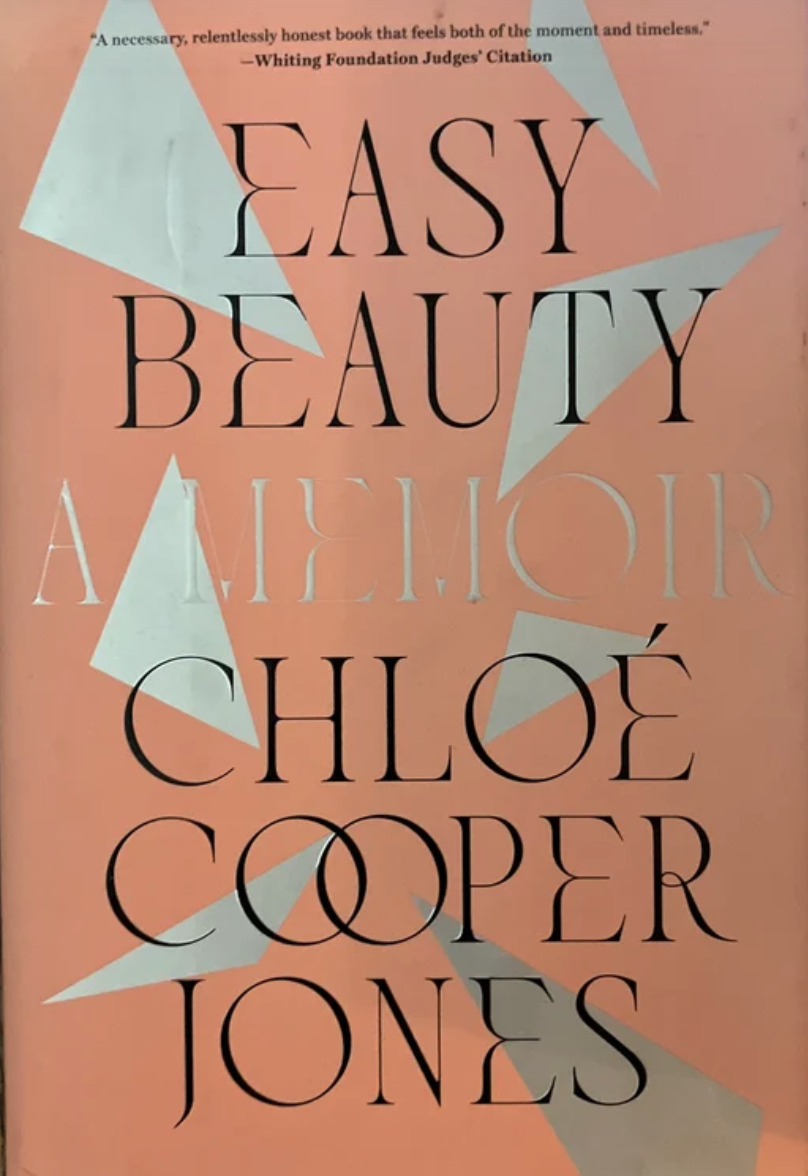
“I am in a bar in Brooklyn listening as two men, my friends, discuss whether or not my life is worth living.”
So begins Chloe Cooper Jones in her brainy memoir, Easy Beauty—on page one, cutting to the essence of her healing journey. If you’ve ever despised yourself for even a second, this story is for you.
Chloe was born with a rare medical condition called sacral agenesis. The condition affects both her stature and gait, so her pain is not only emotional but also physical. At times, she lives in agony.
A good story moves us from the personal to the universal … 
While it was difficult taking in Chloe’s physical pain, taking in the inhumane way people treated her because of her disability was brutal.
Yet most women can appreciate Chloe’s emotional journey. While we may not have actually been pitied for our appearance and dismissed as “less than,” at times, most of us have felt “less than,” isolated, and better off alone. We’ve compensated … by excelling academically, artistically, or in some other way. The brighter we are, the more intricate our coping mechanism.
As a philosophy professor and Pulitzer Prize finalist, Chloe’s way of coping included not only having a social but also a philosophical understanding of desirability and beauty—both easy and complicated. Yet in the end, her yearning to heal was one of the most beautiful, natural things I have ever witnessed on the page. Her quest sent her around the world in search of self-compassion and understanding. And, like all of us, finding it by being at home with ourselves.
It’s curious. Most memoirs contain subtitles that further define their audience. So initially, I wondered why Easy Beauty doesn’t have one. Then I realized the advantage of not having a subtitle. It puts the story’s beauty in the eye of each beholder.