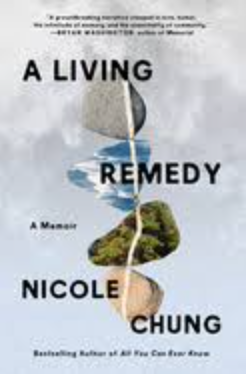
A LIVING REMEDY, a memoir by Nicole Chung
As a ghostwriter specializing in women’s memoirs and an adoptive mom, I enjoyed writing former Miss Deaf America and adoptive mom Brandi Rarus’s memoir entitled Finding Zoe.
An avid reader of women’s memoirs, as well, I especially enjoy adoptees’ stories.
A Living Remedy by Nicole Chung is one such memoir. While not specifically her “adoption story” (All You Can Ever Know is that memoir—and the topic of an upcoming post), her tale centers around caring for her aging parents, so being adopted comes into play.
Supporting our aging parents
In this memoir, Chung recalls her experiences as a Korean child adopted by white parents in an all-white, all-American town where class, more than racial identity or adoption, is what matters most. As the years pass and her father’s health declines while having crappy health insurance, Nicole tries to help.
The inequities in American healthcare
 Chung experiences what many adult children do today: witnessing our parents decline and die, even as we’re scrambling to pay the bills generated by the high cost of medical care in America. The story takes a sharp look at the failures of our healthcare system and how little most of us can do for those we love. Chung shares her experiences with this calamity tangled by class, geographical proximity, COVID, being an only child, as well as a transracial adoptee.
We learn that during the time that Chung’s father was dying due to decades of postponing costly medical check-ups, she and her family couldn’t afford to fly from the East Coast to Oregon to visit him more than once a year. Soon after her father’s death, her mother’s cancer returns and spreads quickly. She saw her mother once before COVID hit.
“I can’t tell you about her death,” she writes, “because I didn’t witness it.”
Healing from parental loss
Chung’s openness and honesty cut me to the quick. It isn’t the frilly language differentiating this memoir, but a story told simply and straightforwardly. Infused with the shame that often comes with being adopted, she writes about what people feel, but never say. Describing her anxiety with piercing clarity, and her vulnerability with piercing boldness. Yet, so soft and open about her grief and other real experiences.
I marveled at how a world-renowned writer struggles with depression and unworthiness. Fearful as the rest of us, Chung’s writing is a window into her soul.
For example, when she speaks of “catastrophizing” or viewing an event or situation as worse than it actually is, or assuming the worst possible outcome, I recognize myself. As I did when she tells of the joy of loving her dog.
Rebuilding and Embracing Life
In A Living Remedy, we are reminded of life’s fragility. We come to understand that, in America, unless you are extraordinarily wealthy, you probably can’t help your loved ones in all the ways you’d imagined. Chung learns to carry on with the “specific, hollow guilt of those who leave hardship behind, yet are unable to bring anyone else with them.”
A Living Remedy makes the memoir genre something to treasure. Like Chung, if you are a woman who has risen above life’s challenges, and are ready to share your story, let’s talk.
.